
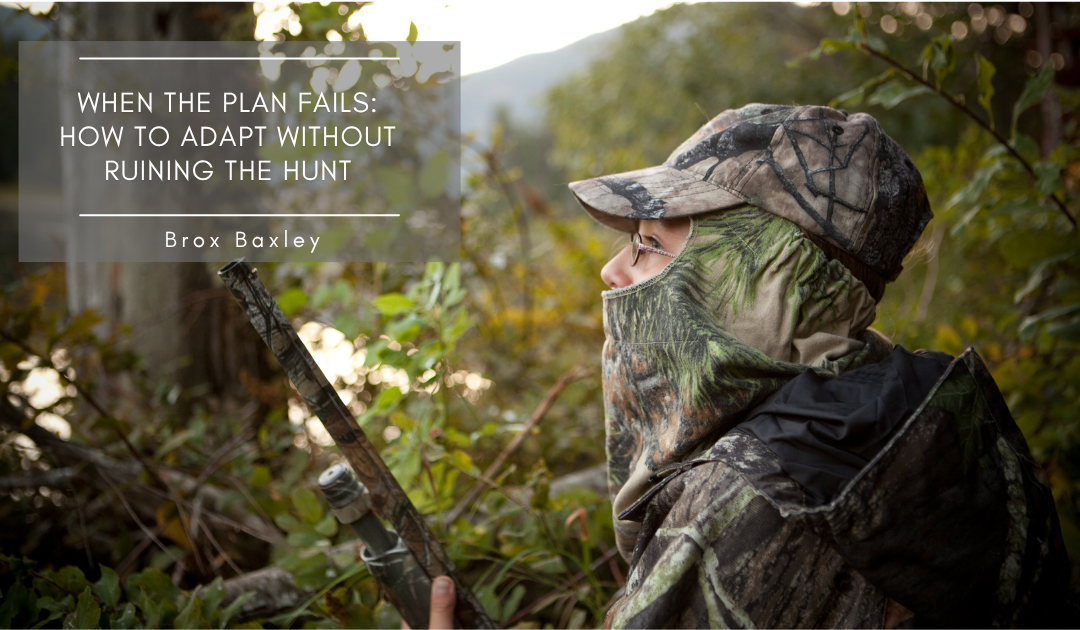
Every hunter heads into the field with a plan. You may have studied the terrain, checked the weather, selected your route, and identified areas where wildlife is likely to move. A good plan provides structure and confidence—but even the best preparation cannot control everything that happens in the field.
Weather changes. Wildlife behaves differently than expected. Access becomes difficult. A promising location suddenly feels unproductive. When reality does not match the plan, the ability to adapt can be more valuable than the original strategy.
Expect the Unexpected
One of the biggest mistakes is becoming too attached to a specific outcome. If you expect wildlife to appear in one particular location at one particular time, you may overlook important information happening around you.
Instead, treat your original plan as a starting point rather than a guarantee.
Conditions in the field are constantly changing. Wind can shift, temperatures can rise or fall, wildlife can alter its movement, and human activity can influence an area. Recognizing these changes early gives you an opportunity to adjust before frustration takes over.
Observe Before Making a Major Change
When something goes wrong, the instinct may be to immediately move somewhere else. Sometimes that is the right decision, but rushing can create more problems.
Take a moment to observe.
Has the wind changed? Are there fresh signs nearby? Has animal activity increased or decreased? Is the terrain behaving differently than expected? Are sounds or movement suggesting that wildlife is using another part of the area?
A short pause can provide information that is more useful than a hurried decision.
Have a Backup Strategy
Adaptability begins before you enter the field. Consider preparing several reasonable options instead of relying entirely on one location or approach.
Know alternative areas, routes, and observation points. Understand how changing conditions could affect them. If your first option becomes unsuitable, you can transition to another plan without starting from scratch.
A backup plan also reduces pressure. When you know you have alternatives, one disappointing development does not feel like the entire hunt has been lost.
Let the Environment Guide You
The field often provides better information than your original assumptions.
Pay attention to tracks, disturbed vegetation, feeding areas, water sources, cover, and other signs of wildlife activity. These observations can help you understand how animals are currently using the landscape.
Rather than forcing the situation to match your expectations, allow your observations to influence your decisions.
This mindset can turn an unsuccessful approach into a valuable learning opportunity.
Avoid Overcorrecting
Adaptation does not mean constantly changing direction.
Moving too frequently, abandoning every location at the first sign of difficulty, or making several decisions without enough information can make a difficult situation worse. Sometimes the smartest adjustment is simply to wait, observe, and allow conditions to develop.
Good adaptation is measured, not impulsive.
Ask yourself what has actually changed and whether that change justifies a different approach.
Learn From Every Failed Plan
A hunt does not have to end with the expected result to be useful.
Afterward, think about what happened. Was the weather different from the forecast? Did wildlife use the terrain differently than expected? Did you misread a sign? Did your timing need adjustment?
Recording these observations can improve future decision-making. Over time, unsuccessful plans become lessons rather than disappointments.
Stay Flexible, Stay Responsible
Adaptability is one of the most valuable skills a hunter can develop. It means recognizing when circumstances have changed, gathering information, and making thoughtful decisions without allowing frustration to take control.
The goal is not to have a perfect plan every time. The goal is to be prepared enough to adjust when the field writes a different story.
When the original strategy stops working, do not automatically consider the hunt ruined. Slow down, observe what the environment is telling you, and make your next decision deliberately. Sometimes the most rewarding part of a hunt is not following the plan—it is learning how to respond when the plan changes.