
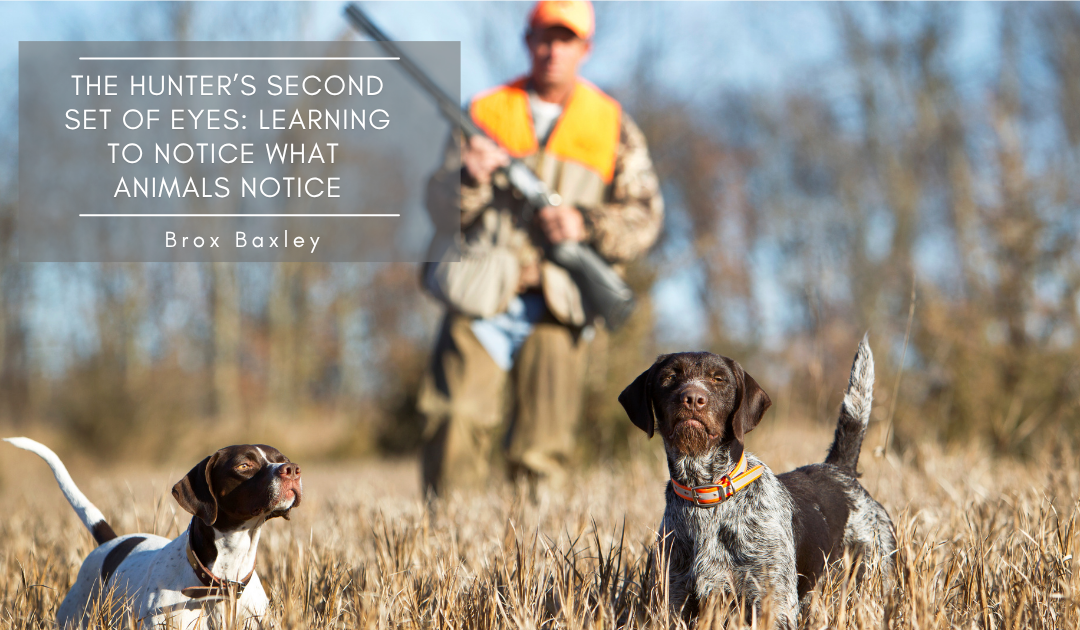
Successful hunting is not always about seeing an animal first. Often, it is about learning to see the world the way an animal experiences it.
Wild animals survive by paying attention to details that people frequently overlook. A slight movement against the skyline, an unusual sound, a change in wind, or a patch of disturbed vegetation can immediately signal danger. For hunters, developing an awareness of these same details can make time in the field more productive, while also creating a deeper understanding of wildlife and its environment.
Start by Studying the Landscape
Before focusing on finding an animal, take time to understand the terrain around you. Look at ridges, openings, thick cover, water sources, fallen trees, natural funnels, and transitions between different types of vegetation.
Animals rarely move randomly. They use the landscape to find food, water, shelter, and routes that make them feel secure. A thick patch of vegetation beside an open area, for example, may provide both cover and access to feeding ground.
Instead of asking only, “Where would I hunt from?” ask, “Where would an animal feel comfortable moving through?”
That simple change in perspective can reveal details that might otherwise be ignored.
Learn to Read Movement
Animals are extremely sensitive to movement, particularly movement that appears out of place.
As you observe the woods, pay attention to how branches, leaves, grass, and shadows move naturally in the wind. This gives you a reference point. When something moves differently from everything around it, your attention will naturally be drawn toward it.
The same principle works in reverse. If your movement looks unusual compared with the surrounding environment, wildlife may notice it before you notice them.
Moving deliberately and taking time to observe between movements can help you become less disruptive to the environment.
Listen Before You Look
Vision is only one part of awareness. Wildlife depends heavily on sound.
Pause occasionally and listen to the natural rhythm of the area. Birds calling, leaves shifting, branches moving, and distant animal activity can provide useful information about what is happening around you.
More importantly, listening teaches you what normal sounds like.
Once you understand the ordinary soundscape, unusual noises become easier to recognize. A sudden change in bird behavior or an unexpected rustle may be worth investigating rather than immediately dismissing.
Pay Attention to Wind and Scent
Animals live in a world of scent. Wind constantly carries information through the landscape, and many species rely on their sense of smell to detect potential threats.
Rather than treating wind as just another weather condition, consider how it changes the way an animal experiences its surroundings. Observe how vegetation responds to the breeze and how air moves through open areas, valleys, and wooded sections.
Understanding these patterns encourages a hunter to think beyond what can be seen and consider what wildlife may be detecting from a distance.
Look for Small Changes
One of the most valuable hunting skills is noticing what has changed.
Bent grass, disturbed leaves, fresh tracks, broken vegetation, feeding signs, or newly exposed soil can all indicate that something has passed through an area. None of these clues should automatically be treated as proof of recent animal activity, but together they can help build a picture of how wildlife uses the landscape.
The key is observation rather than assumption.
Become a Student of the Woods
Developing a “second set of eyes” is really about becoming more observant. Spend time studying the environment even when nothing exciting is happening. Notice patterns, learn seasonal changes, and watch how wildlife responds to weather, vegetation, sound, and human presence.
The best hunters are not necessarily the ones who move the fastest or cover the most ground. They are often the ones who notice the most.
When you begin seeing the woods through the senses and habits of wildlife, every outing becomes a learning experience. You stop simply searching for animals and start understanding the environment they call home. That shift—from looking harder to observing smarter—can transform the way you experience the field.